
Random marketing feels busy. A simple digital growth system gives every channel a job: your website converts visitors, SEO brings steady search demand, PPC tests faster, email follows up, and tracking shows what’s working.
Build your small business digital marketing strategy in this order.
- Fix the website offer, trust signals, calls to action, speed, and mobile experience.
- Add SEO content that answers real buyer questions.
- Use PPC to test services, keywords, and landing pages.
- Use email to recover leads and encourage repeat business.
- Track leads, quality, cost, and revenue outcomes.
What a Digital Growth System Means
A digital growth system is a simple way to make every marketing channel do a specific job. Think of it like a small production line: one part attracts people, one part turns them into leads or customers, one part follows up, and one part tells you what’s working.
Random digital marketing looks like this: post on social media, run an ad, write a blog, update a page, then hope sales improve. A system is different because each action connects to the next step.
- Website: explains your offer and turns visitors into inquiries, bookings, calls, or purchases.
- SEO (search engine optimization — how Google finds your site): brings in people searching for answers or services.
- PPC (pay-per-click advertising — ads you pay for when someone clicks): tests offers, keywords, and landing pages faster.
- Email: follows up with leads, past customers, and people who didn’t act yet.
- Measurement: shows which sources create real opportunities and revenue.
So your small business digital marketing strategy isn’t “do more marketing.” It’s build the next missing piece.
Start With a Website That Can Convert
Your website is where attention turns into action. Before you spend more on SEO or PPC, make sure visitors can quickly understand what you do, why they should trust you, and what to do next.
Start with the basics:
- Add trust signals: reviews, project photos, certifications, case studies, or named clients.
- Use one main CTA (call to action — the button or link asking someone to act), such as “Request a Quote” or “Book a Call.”
- Check mobile pages. Most people won’t pinch, zoom, or hunt for your phone number.
- Create simple conversion paths: form, phone, booking link, or email.
| Symptom | Fix first | Number to watch |
|---|---|---|
| Traffic but few inquiries | Improve offer and CTA | Conversion rate |
| Many form starts, few submits | Shorten the form | Completed leads |
| Mobile visitors leave fast | Fix speed and layout | Mobile conversions |
For example, a plumbing company with steady traffic but almost no calls doesn’t need more traffic yet. It needs clearer service pages and easier contact options. Blue Ocean HQ’s website design and conversion work focuses on this foundation before adding heavier marketing spend.
Use SEO for Durable Demand
SEO (search engine optimization — helping Google understand when to show your site) brings in people who are already searching for your services. It’s durable because a useful service page or article can keep attracting visits over time, though results vary by market, competition, and consistency.
Build SEO around real customer intent:
- List your core services. Use plain phrases customers would type, like “emergency plumber near me” or “bookkeeping for contractors.”
- Create one strong page for each money service. Don’t cram every offer onto one generic page.
- Answer buyer questions with helpful content. A local HVAC company might publish “Should I repair or replace my AC?” and link that article to its AC service page.
- Add local proof. Include service areas, reviews, project examples, photos, and clear contact options.
- Track which SEO pages create inquiries, not just visits. Traffic is nice. Leads and booked work matter more.
This is where SEO connects back to your system. Search content attracts demand, service pages convert it, and tracking shows what’s worth improving. Blue Ocean HQ’s SEO services focus on this kind of SEO services instead of chasing rankings that don’t turn into customers.
Use PPC for Faster Testing
PPC (pay-per-click advertising — ads where you pay when someone clicks) helps you test demand faster than SEO because you can choose the search terms, offer, location, and landing page right away.
Use it to answer practical questions:
- Choose one service to test. Don’t advertise everything. A plumber might test “emergency drain cleaning” before promoting every service on the site.
- Track lead quality, not just form fills. Ten cheap leads that never answer the phone aren’t better than three serious inquiries.
- Use the results to improve the whole system. If one offer converts well in ads, turn it into an SEO page, add it to your website, and include it in email follow-ups.
So what does this mean in practice? A local business can use SEO to answer buyer questions over time while using PPC to test which services and offers convert fastest. Blue Ocean HQ’s PPC services are built around that kind of measurable testing, not just buying traffic.
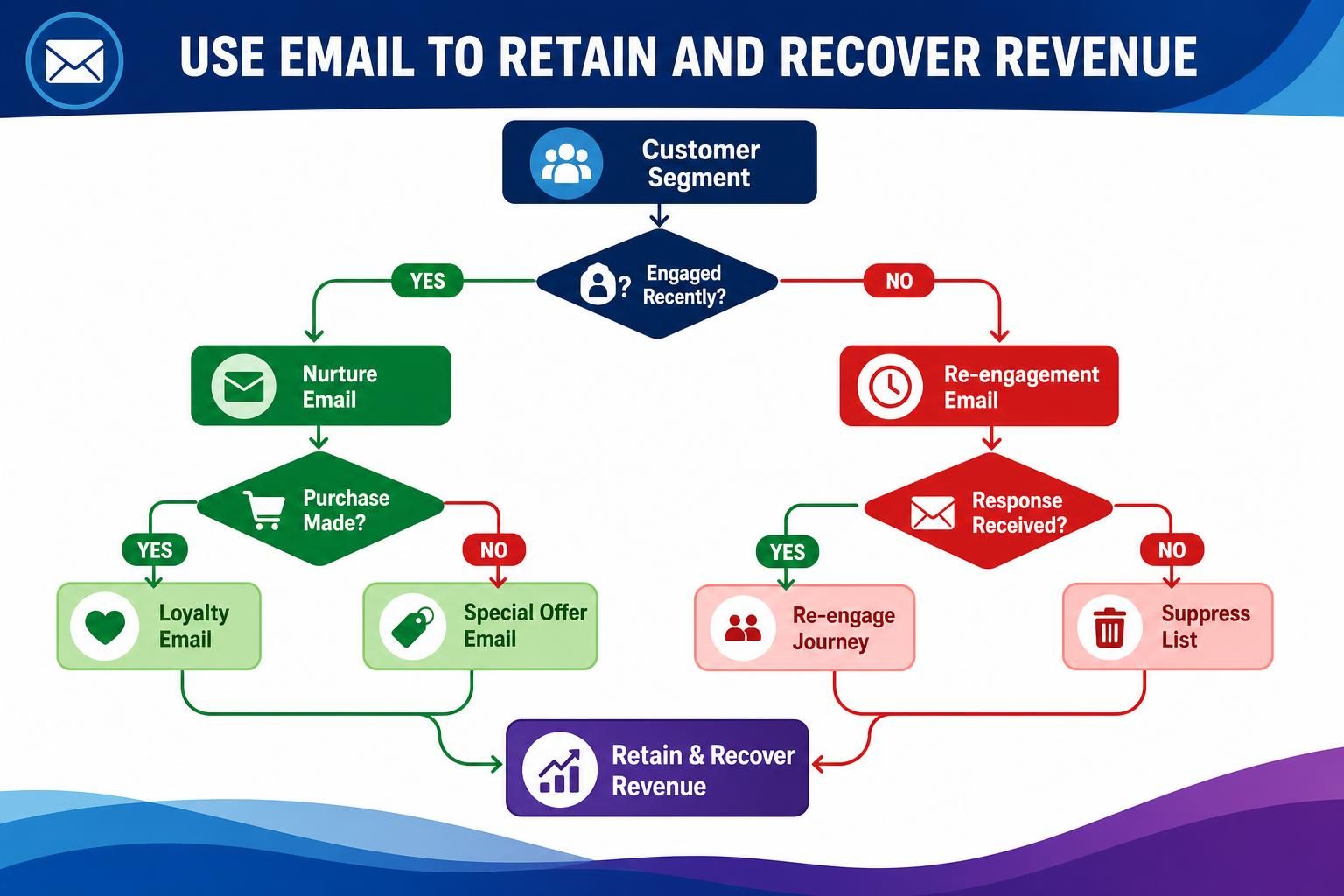
Use Email to Retain and Recover Revenue
Email marketing is the follow-up layer of your system. It means sending useful, timely messages to people who’ve already shown interest, instead of hoping they remember to come back.
Think of it like the front desk for your website. If someone asks a question, downloads a guide, requests a quote, or buys once, email helps you continue the conversation.
A simple setup can do a lot:
| Flow | Trigger | First delay | Email count | Main CTA | Suppression rule |
|---|---|---|---|---|---|
| Confirmation | Form, quote, or booking request | Immediately | 1 | Confirm next step | Suppress after response or booking |
| Lead nurture | Download or consultation request | 1 day | 2–3 | Book a call or reply | Suppress if booked, replied, or unsubscribed |
| Re-engagement | Quiet lead | 7–14 days | 1–2 | Resume the conversation | Suppress after final email |
| Past customer | Purchase or completed job | Product/service cycle | 1–3 | Reorder, maintenance, or related service | Suppress if not opted in or unsubscribed |
Use opt-in consent, honor unsubscribes, avoid promotional content in transactional-only emails, and monitor spam complaints.
This matters because some businesses collect leads but lose revenue simply because nobody follows up. Blue Ocean HQ’s email marketing services help small businesses build these email marketing around real customer actions, not random newsletters.
Track the Right Numbers
Track only the numbers that tell you where customers come from, what they do, and whether the work turns into revenue. You don't need a giant dashboard. You need a simple scorecard you can review every week.
- Traffic source: Check whether visitors came from Google search, PPC ads, email, social, or referrals. Use Google Analytics 4, a free website tracking tool, for this.
- Conversion rate: Track the percentage of visitors who take the next step, like calling, booking, or filling out a form. If traffic is steady but inquiries are low, fix the website before buying more clicks.
- Cost per lead or acquisition: For PPC, divide ad spend by leads or new customers. This shows whether paid traffic is affordable for your margins.
- Lead quality: Mark leads as good, poor, or wrong-fit. Ten cheap leads don't help if none can buy.
- Email performance: Treat opens as directional because privacy changes can inflate or obscure them. Watch clicks, conversions, revenue, unsubscribe rate, and placed-order rate where relevant.
- Revenue outcomes: Tie leads back to quotes, sales, repeat orders, or booked jobs.
So what does this mean in practice? Review the weakest number first, then decide whether your next move is website improvement, SEO content, PPC testing, or email follow-up.
Build in the Right Order

Build the system from the point closest to revenue, then move outward. That keeps you from paying for more attention before you can turn that attention into leads or sales.
- Fix the website first. If people visit but don’t inquire, improve the offer, proof, calls to action, mobile experience, and contact path before adding more SEO or PPC.
- Add basic tracking. Make sure you can see traffic source, form submissions, calls, bookings, and sales outcomes.
- Build SEO next. Create service pages and helpful content around real buyer questions so search traffic can grow over time.
- Use PPC to test faster. Run small paid search tests to learn which services, keywords, offers, and landing pages produce good-fit leads.
- Add email follow-up. If leads come in but go quiet, use simple nurture and reminder emails to recover missed opportunities.
- Review the bottleneck monthly. A small team should ask: do we need better conversion, more demand, faster testing, or stronger follow-up?
If you want execution help, Blue Ocean HQ’s website design, SEO, PPC, and email marketing services are built to connect these steps into one measurable system.
FAQ
How Much Should a Small Business Spend First?
Start with the bottleneck closest to revenue. If your website gets visitors but few inquiries, fix the offer, calls to action, trust signals, and forms before buying more traffic. If the site converts but few people find it, put budget into SEO content or small PPC tests.
Should I Use SEO or PPC First?
Use SEO when you want steady demand from people searching over time. Use PPC when you need faster feedback on keywords, offers, and landing pages. Many local businesses use both: PPC shows what converts quickly, then SEO turns those lessons into longer-term pages and content.
How Long Does This Take to Work?
It depends on your market, website, competition, and follow-up process. PPC can usually produce learning faster because you control the traffic. SEO often takes longer because search engines need time to discover and trust your pages. Website and email fixes can improve results as soon as better-fit leads arrive.
What if I Don’t Have Time to Manage Everything?
Keep the system small. Pick one main service, one landing page, one traffic source, and one follow-up sequence. Review the numbers monthly. You don’t need a complicated dashboard at first. You need to know where leads come from, which ones are good, and what turns into revenue.
Conclusion
A small business digital marketing strategy works best when it’s built as a system, not a pile of disconnected tasks. Start with the website because that’s where visitors decide whether to contact you. Then add SEO for durable demand, PPC for faster testing, email for follow-up, and simple tracking so you know what’s working.
The practical decision is simple: fix the weakest link first. If you need help turning that into measurable execution, review your current website, traffic, leads, and follow-up process with Blue Ocean HQ and choose the next step that’s closest to revenue.