
A plumber searching for more emergency repair calls in nearby suburbs needs local SEO for map visibility and traditional SEO for website pages that answer “how much does pipe repair cost?”.
So local SEO vs SEO isn’t an either-or choice. Local SEO helps you appear for searches tied to a place. Traditional SEO, often called organic SEO, helps your website rank in the regular results for broader searches.
Quick Summary
- Local SEO focuses on Google Maps, your Google Business Profile, reviews, proximity, and service-area relevance.
- Traditional SEO focuses on website rankings, helpful content, technical site health, and authority.
- Service businesses usually need both because customers search in different ways.
- Google Maps SEO is crucial for urgent searches like plumbers, restoration companies, and medical practices.
- Service pages and location pages help local service businesses, real estate businesses, and multi-location practices show relevance.
- Start with your Google Business Profile, reviews, core service pages, then expand into location pages and educational content.
The Main Difference
For regular Google results, traditional seo helps your website appear. Local SEO helps your business appear for searches tied to a place, especially Google Maps and the local “map pack” results.
So local SEO vs SEO isn’t an either-or choice. It’s about search intent. Is the person looking for general information, or are they trying to hire someone nearby?
A plumber who wants “emergency plumber in Phoenix” needs local SEO because the searcher wants fast, nearby help. That same plumber may also need traditional SEO for a guide like “why does my water heater keep leaking,” which can bring in research-stage customers.
| Business decision | Traditional SEO | Local SEO | Best first move |
|---|---|---|---|
| Get found beyond one city | Organic website rankings | Less central | Build useful service content |
| Get calls from nearby searches | Supports trust | Google Business Profile, Maps, reviews | Optimize local profile first |
| Serve suburbs without offices | Location pages can help | Service-area relevance matters | Create honest location content |
| Build long-term visibility | Content, site health, authority | Reviews and local signals | Use both together |
Use this distinction before planning your SEO Strategy or comparing local SEO pricing, because the right budget depends on which visibility problem you’re solving first.
What Traditional SEO Focuses on
Traditional SEO is about making your website useful, easy for Google to read, and trusted enough to show in the regular organic results. “Organic” means the unpaid blue-link results below ads and often below the map pack.
- Build clear service pages, such as “water heater repair,” “mold remediation,” or “sports injury treatment.”
- Create helpful content that answers research-stage questions, like “How long does water damage restoration take?”
- Improve technical SEO, which means making sure your site loads fast and Google can understand it.
- Earn authority, which means other trustworthy sites mention or link to your business.
So what does this mean in practice? A real estate business might publish neighborhood buying guides. A medical practice might write condition pages. These don’t replace local SEO, but they widen how people find you before they’re ready to call.
What Local SEO Focuses on
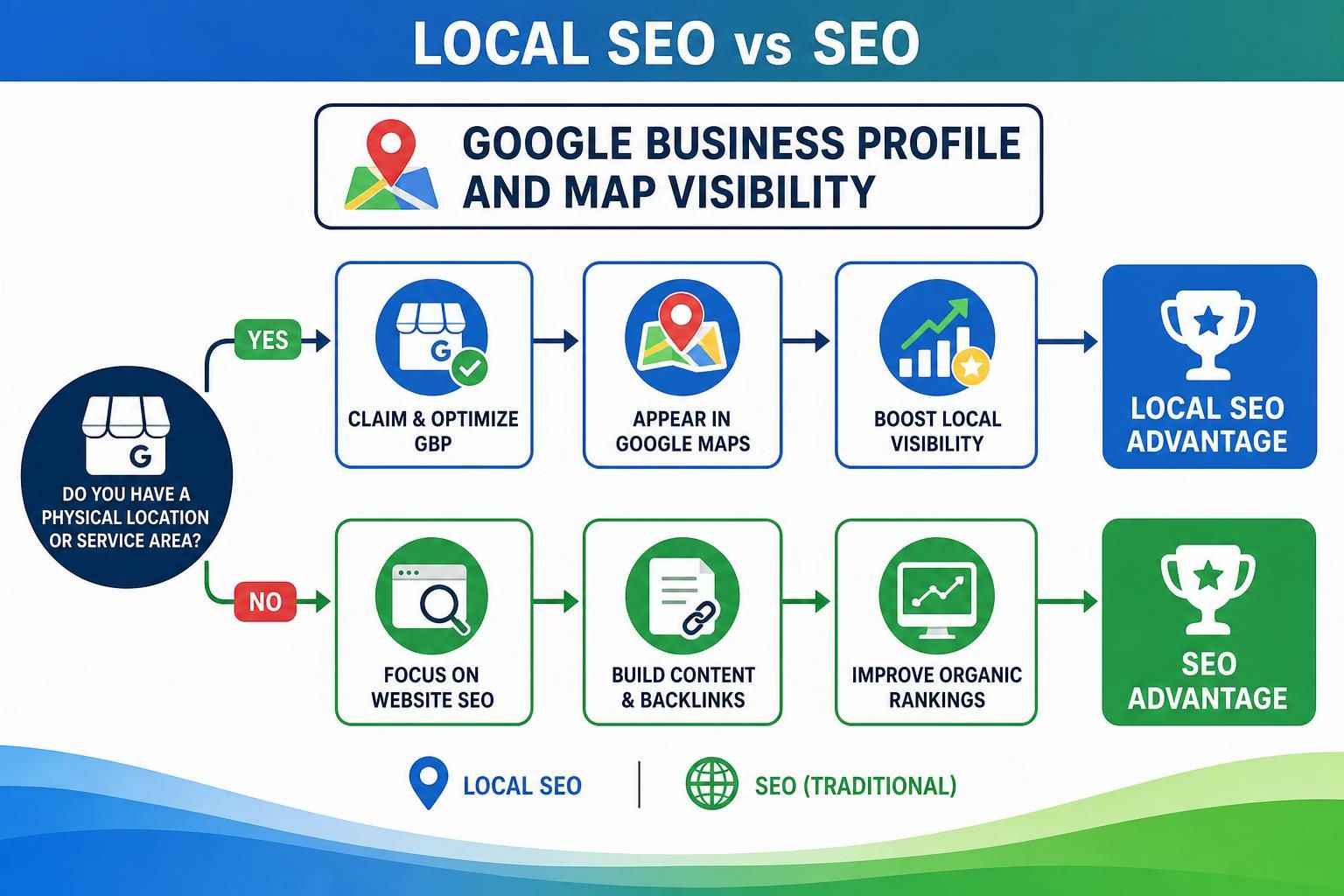
Local SEO focuses on searches with local intent, meaning the person wants a nearby provider now or soon. Think “emergency plumber near me,” “water damage restoration in Tampa,” or “family doctor open today.”
- Map pack visibility, which is the group of local results shown above regular website results.
- Reviews, because searchers use them to judge trust fast.
- Local citations, which are mentions of your name, address, and phone number on directories.
- Proximity, meaning how close the searcher is to your business or service area.
- Service-area relevance, which tells Google where you actually work.
For a plumber, that might mean showing service areas across nearby suburbs. For a restoration company, it means proving you handle urgent local jobs, not just writing general cleanup advice.
Why Service Businesses Need Both
Service businesses need both because customers search in different modes. A homeowner with water pouring through the ceiling may tap a map result and call a trusted restoration company nearby. The same person might later search “how long does mold remediation take” and click an organic website result before choosing who to hire.
So what does this mean in practice? Use local SEO to capture “near me,” city, and emergency searches. Use traditional SEO to answer research questions, explain your services, and build trust before someone is ready to call.
For a medical practice, Google Maps can help patients find the nearest office, while organic pages can explain treatments, insurance questions, or recovery timelines. For real estate, neighborhood pages support local visibility, while broader guides attract buyers and sellers earlier.
A good SEO Strategy should connect both paths instead of treating them as separate projects.
Google Business Profile and Map Visibility
Your Google Business Profile, or GBP, is the free business listing that can show in Google Maps and the “map pack” near the top of local results. For a plumber, that might mean showing when someone searches “emergency plumber near me” or “water heater repair in Denver.”
Treat it like your local storefront on Google:
- Add your correct business name, phone number, website, hours, services, and service areas.
- Upload real photos of your team, vehicles, office, or job sites.
- Ask happy customers for honest reviews. Don’t buy them or script them.
- Post updates when you add services, change hours, or serve new nearby suburbs.
Map visibility is influenced by relevance, distance, and trust signals. It’s not guaranteed, but a complete profile gives Google and customers clearer information.
Service Pages and Location Pages
Your website still matters, even if Google Maps brings many calls. Service pages explain what you do. Location pages explain where you do it.
A plumber might need one page for “emergency drain cleaning” and a separate location page for “plumber in Mesa” if Mesa is a real service area. A restoration company could build pages for water damage cleanup, mold remediation, and fire damage repair, then add useful location pages for the cities it truly serves.
Keep each page specific:
- Describe the service in plain language.
- Add proof, like photos, reviews, licenses, or insurance details.
- Include clear next steps, such as calling or requesting an estimate.
- Don’t copy the same city page 20 times and swap the place name.
If you’re planning the site structure, an SEO Strategy guide can help you decide which pages to build first.
How to Prioritize the Work

Start with revenue: nearby people ready to call.
- Claim and clean up your Google Business Profile. Add services, hours, service areas, photos, and a simple description. This matters first for a plumber, restoration company, or service-area business chasing urgent local searches.
- Ask real customers for reviews. Don’t script them or offer rewards. Just make the request easy after a completed job.
- Build your core service pages. One page for “water damage restoration,” “emergency plumbing,” “family dentistry,” or “home valuation,” not one vague “services” page.
- Add location pages only where you truly work. Make each one useful, not copied.
- Create helpful organic content after the basics are solid. A medical practice might explain symptoms. A real estate business might cover neighborhood buying guides.
If budget is tight, a local SEO pricing guide can help you choose what to tackle first.
FAQ
Is Local SEO the Same as Regular SEO?
No. Traditional SEO helps your website show in regular Google results. Local SEO helps your business show for nearby searches, especially in Google Maps and the map pack. A plumber needs local SEO for “emergency plumber near me,” but traditional SEO can help with a guide like “why is my water heater leaking?”
Can a Service-area Business Do Local SEO Without a Storefront?
Yes. A service-area business can use local SEO without showing a storefront, as long as the business clearly defines where it serves customers. The key is to keep the Google Business Profile accurate, list real service areas, earn honest reviews, and support those locations with useful website content.
Should I Work on Google Maps or My Website First?
Start where the biggest gap is. If your Google Business Profile is incomplete, fix that first because it affects local visibility. If you already have a strong profile but weak service pages, improve the website next. A restoration company, for example, needs both urgent map visibility and trust-building service pages.
Conclusion
The practical choice isn’t local SEO versus traditional SEO as if you can only pick one. If customers choose you based on location, speed, reviews, and trust, local SEO should usually come first. If people research before contacting you, traditional SEO helps your website answer those questions and build confidence.
Start with the basics: complete your Google Business Profile, ask for honest reviews, build clear service pages, and add location pages only for real service areas. Then use an SEO Strategy to decide which content, technical fixes, and authority-building work should come next. If you’re planning a budget, compare your gaps against a local SEO pricing guide before hiring help or choosing what to do yourself.