
Local SEO pricing can feel confusing because two businesses in the same town may need very different work. A simple Google Business Profile tune-up might be enough for one shop. Another business may need website fixes, new service pages, review support, citation cleanup, and monthly reporting. In this guide, you’ll learn what local SEO cost usually depends on, what typical planning ranges look like, and how to compare local SEO packages without getting trapped by a cheap but weak offer. We’ll keep it practical and beginner-friendly, so you can build a sensible budget before you request quotes.
Best for: Small business owners who want realistic planning ranges before comparing local SEO quotes or monthly packages. Not ideal when: You need a guaranteed fixed price before anyone reviews your website, market, locations, and competitors. Good first step if: You’re unsure whether your biggest issue is your website, Google profile, citations, reviews, or content. Call a pro if: Your rankings dropped suddenly, your listings are duplicated, or multiple locations need separate cleanup and tracking.
Quick Summary
- Local SEO helps nearby customers find your business in Google Search and Google Maps.
- Costs vary by competition, location count, website condition, content needs, citations, and review work.
- One-time projects usually cost less upfront than ongoing monthly retainers, but they solve different problems.
- Cheap packages often skip strategy, reporting, content, or technical fixes.
- A useful budget starts with your market difficulty and the value of each new customer.
Local SEO Pricing in Plain English
Local SEO pricing is the cost of improving how your business appears when nearby customers search for your services. Local SEO means local search engine optimization, which is the work that helps Google understand where you are, what you offer, and why you deserve to show up for local searches.
Think of it like setting up a storefront in a busy town. Your sign, address, opening hours, reputation, and window display all matter. Online, those pieces include your website, your Google Business Profile, reviews, local business listings, and service pages. If you’re new to the basics, this guide to search engine optimization can help you understand how search engines read and rank websites.
Local SEO is different from paid ads. With ads, you pay for placement while the campaign runs. With SEO, you invest in improving your online presence so it can earn visibility over time. It’s also different from broad national SEO because local SEO focuses on searches tied to a city, neighborhood, service area, or “near me” intent.
So what are you really paying for? You’re paying for research, fixes, setup, content, tracking, and ongoing improvements. The more messy or competitive your situation is, the more work it usually takes.
What Affects the Cost
The biggest factors affecting local SEO cost are scope, competition, location count, website condition, content needs, citations, reviews, and Google Business Profile optimization cost. Scope simply means how much work needs to be done. A small cleanup project costs less than rebuilding your local presence from the ground up.
Start by checking your market. A plumber in a large city usually faces more competition than a niche consultant in a small town. More competition means you may need stronger service pages, better technical SEO, more review activity, and ongoing content. Technical SEO means fixing website issues that make it harder for Google or visitors to use your site, such as slow pages, broken links, or confusing page structure.
Now check your location count. A single-location bakery needs one main local strategy. A multi-location home-services company may need separate pages, listings, Google profiles, tracking, and review plans for each branch. That naturally raises the small business SEO cost because the work repeats across locations.
- Number of locations or service areas
- Strength of local competitors
- Condition of your website
- Need for new service or city pages
- Inconsistent citations, which are business listings showing your name, address, and phone number
- Duplicate or incorrect listings
- Review generation and response process
- Google Business Profile setup, cleanup, photos, services, and posts.
Typical Pricing Ranges
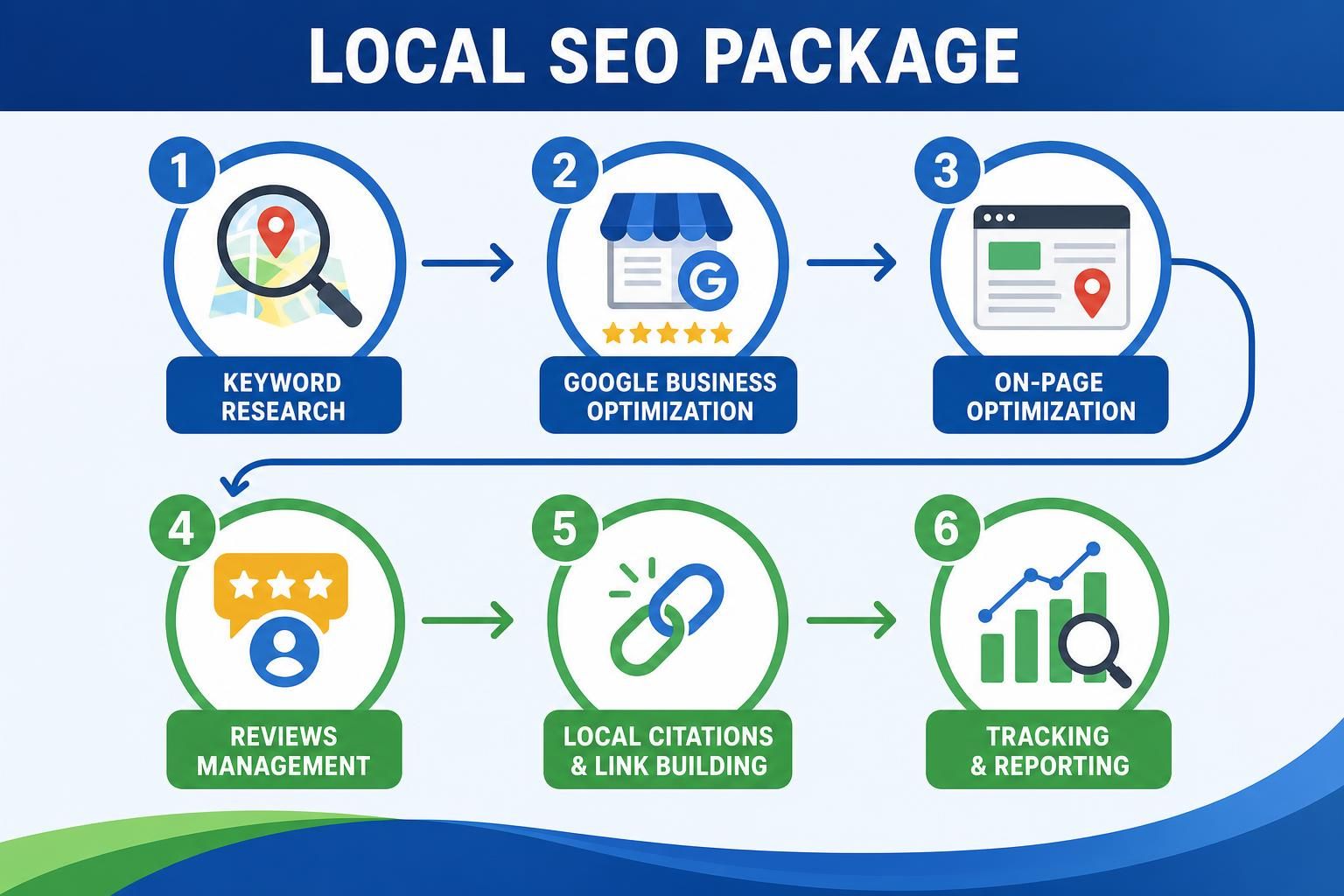
Typical local SEO pricing ranges from a few hundred dollars for a narrow one-time task to several thousand dollars per month for competitive or multi-location campaigns. These are educational planning ranges, not fixed prices, because actual quotes vary by market, provider, competition, scope, website condition, location count, and deliverables.
Pricing also changes by provider type. A solo consultant may price differently from a specialist agency. A simple setup may be quoted as a one-time project, while ongoing work is often sold as an SEO monthly retainer. A retainer means you pay each month for continued work, monitoring, reporting, and improvements.
| Service type | Educational planning range | Usually includes | Best fit |
|---|---|---|---|
| One-time local setup | $500 to $2,500 | Profile setup, basic on-page edits, citation checks | New or lightly optimized business |
| Audit or cleanup project | $750 to $3,500 | Technical review, listing cleanup, priority fixes | Outdated website or messy listings |
| Monthly local SEO retainer | $750 to $5,000+ per month | Ongoing optimization, content, reporting, reviews | Competitive or growth-focused business |
| Multi-location local SEO | $2,000 to $10,000+ per month | Location pages, listings, tracking by branch | Several offices, stores, or service areas |
Here’s the freshness note: these ranges are general planning bands based on common buyer scopes, provider package patterns, and typical deliverables. Verify current quotes before you buy, because your market and starting point can change the budget a lot.
Cheap vs Strategic Local SEO
Cheap local SEO usually costs less because it limits the work, while strategic local SEO costs more because it connects research, fixes, content, tracking, and ongoing decisions. A low-budget offer isn’t automatically bad. It may be fine if you only need a basic profile setup or a small citation cleanup.
The risk is that cheap packages often look busy without solving the real problem. You may get copied reports, thin content, basic directory submissions, or generic keyword lists. If your website is slow, your service pages are weak, or your Google Business Profile is incomplete, those surface-level tasks won’t do enough.
A strategic plan should explain what will be done and why. For example, a single-location service business in a moderately competitive city might compare a $1,000 one-time setup against a $1,500 monthly retainer. The setup could fix profile details and key pages. The retainer could add content, review support, reporting, and ongoing competitor checks.
A simple package comparison might look like this:
- Higher-budget plan: profile optimization, on-page edits, technical fixes, service page content, citation cleanup, review process guidance, call tracking recommendations, and clearer reporting.
Ask these questions before signing:
- Will you fix technical website issues or only send recommendations?
- How will you choose local keywords?
- Will you work on my Google Business Profile?
- Are citations and duplicate listings included?
- How will reporting connect work to calls, forms, and direction requests?
- What happens if the first plan doesn’t move the right metrics?
What Should Be Included in a Local SEO Package
A solid local SEO package should include Google Business Profile work, local keyword targeting, on-page optimization, citations, review support, technical fixes, and clear reporting. Google Business Profile is the free business listing that can appear in Google Maps and local search results.
Start with the basics. Your name, address, phone number, categories, services, hours, photos, and description should be accurate. Then your website should support the same message. On-page optimization means improving the visible page content and hidden page elements that help search engines understand each page.
A practical package may include:
- Google Business Profile optimization
- Website title tags and page headings
- Service page improvements
- Citation cleanup and consistency checks
- Review generation guidance and response templates
- Technical SEO fixes
- Monthly reporting with plain-English notes
For example, a business with a good website but weak citations, few reviews, and an unfinished Google profile may not need a full website rebuild. It may need focused local trust work first. That’s why scope matters more than buying the biggest package.
When a One-time Project is Enough
A one-time local SEO project is enough when your main problems are setup, cleanup, or clear technical issues that don’t require constant new work. This can make sense for a new business that needs its Google profile created, basic pages optimized, and important citations corrected.
Use a one-time project when the finish line is obvious. For example, your website may have missing page titles, incorrect business information, or duplicate listings. Once those are fixed, you can monitor results before committing to a retainer.
But don’t expect a one-time project to do the job of an ongoing campaign. If competitors publish new content, earn steady reviews, and improve their pages, you’ll likely need continued work too. A retainer makes more sense when you’re in a competitive city, serve several areas, or need regular content.
An outdated website is another warning sign. If pages load slowly, services are unclear, or the site is hard to use on a phone, local SEO may struggle until those issues are cleaned up. In that case, pay for the foundation before paying for monthly growth work.
How to Budget for Local SEO

You should budget for local SEO by matching your spend to your competition level, business size, location count, current website condition, and growth goal. Don’t start with “What’s the cheapest plan?” Start with “What problem are we trying to solve?”
Use this simple process:
- Search your main services in your city.
- Check whether your website clearly explains every core service.
- Review your Google Business Profile for missing services, photos, hours, or categories.
- Check whether your business information is consistent across major listings.
- Decide whether you need setup, cleanup, or ongoing growth.
Here’s a simple return example. If one new customer is worth $800 and local SEO helps you earn 4 additional customers in a month, that’s $3,200 in potential value. If your monthly retainer is $1,500, the math may make sense. But if one customer is worth $50, you’ll need far more volume.
For a single-location business, a one-time setup plus a modest monthly plan may be enough. For a multi-location company, budget more because each location needs its own optimization, content, citations, and tracking.
FAQ
Local SEO pricing questions usually come down to what you need now, what can wait, and how competitive your local market is. The right answer is rarely one universal number.
Before you compare quotes, write down your locations, services, target cities, current website issues, and whether your Google Business Profile is already active. That small bit of prep makes proposals much easier to judge.
How Much Should a Small Business Spend on Local SEO?
A small business might plan for $500 to $2,500 for a one-time setup or $750 to $5,000+ per month for ongoing work. Treat those as educational ranges, not guaranteed quotes. Your final cost depends on competition, website condition, location count, and deliverables.
Is Google Business Profile Optimization Enough by Itself?
Google Business Profile optimization may be enough if your website is solid, your market is low competition, and your listings are consistent. If your pages are weak or competitors are active, profile work alone may not carry the full strategy.
Why Do Local SEO Packages Vary so Much?
Packages vary because providers include different work. One may only update your profile and listings. Another may include technical fixes, content, review support, reporting, and competitor research. Always ask for the exact task list.
Should I Choose a Monthly Retainer or a One-time Project?
Choose a one-time project for setup or cleanup. Choose a monthly retainer when you need ongoing content, review growth, technical improvements, and competitive monitoring. If you’re unsure, start with an audit so you know what the real gaps are.
Conclusion
Local SEO pricing makes more sense when you see it as a scope decision, not a fixed menu item. Your cost depends on your market, website, Google profile, citations, reviews, content needs, and number of locations.
If you’re comparing local SEO packages, ask what’s included, what problem each task solves, and how progress will be reported. The smartest next step is to request an SEO review so you can understand your current position, avoid overpaying for the wrong work, and set a realistic budget for growth.